I use light and machine learning to understand materials.
My background is in computer vision (CV) and natural language processing (NLP). These days, I bring those tools into the lab, combining them with advanced optical characterization to study materials and optoelectronic devices.
I’m especially interested in experiments where data are scarce, signals are weak, or the important changes happen too quickly to capture. How can we get more reliable information from these measurements? And what can they tell us about how a material works?
My work ranges from self-supervised imaging and high-throughput spectroscopy to interpretable machine learning and language-model-guided experiments. The common thread is using better measurements and better analysis to explore materials and uncover useful scientific relationships.
I studied materials science at Imperial College London, followed by an MPhil and PhD at the University of Cambridge. I have since worked as a postdoctoral researcher at MIT and Purdue University.
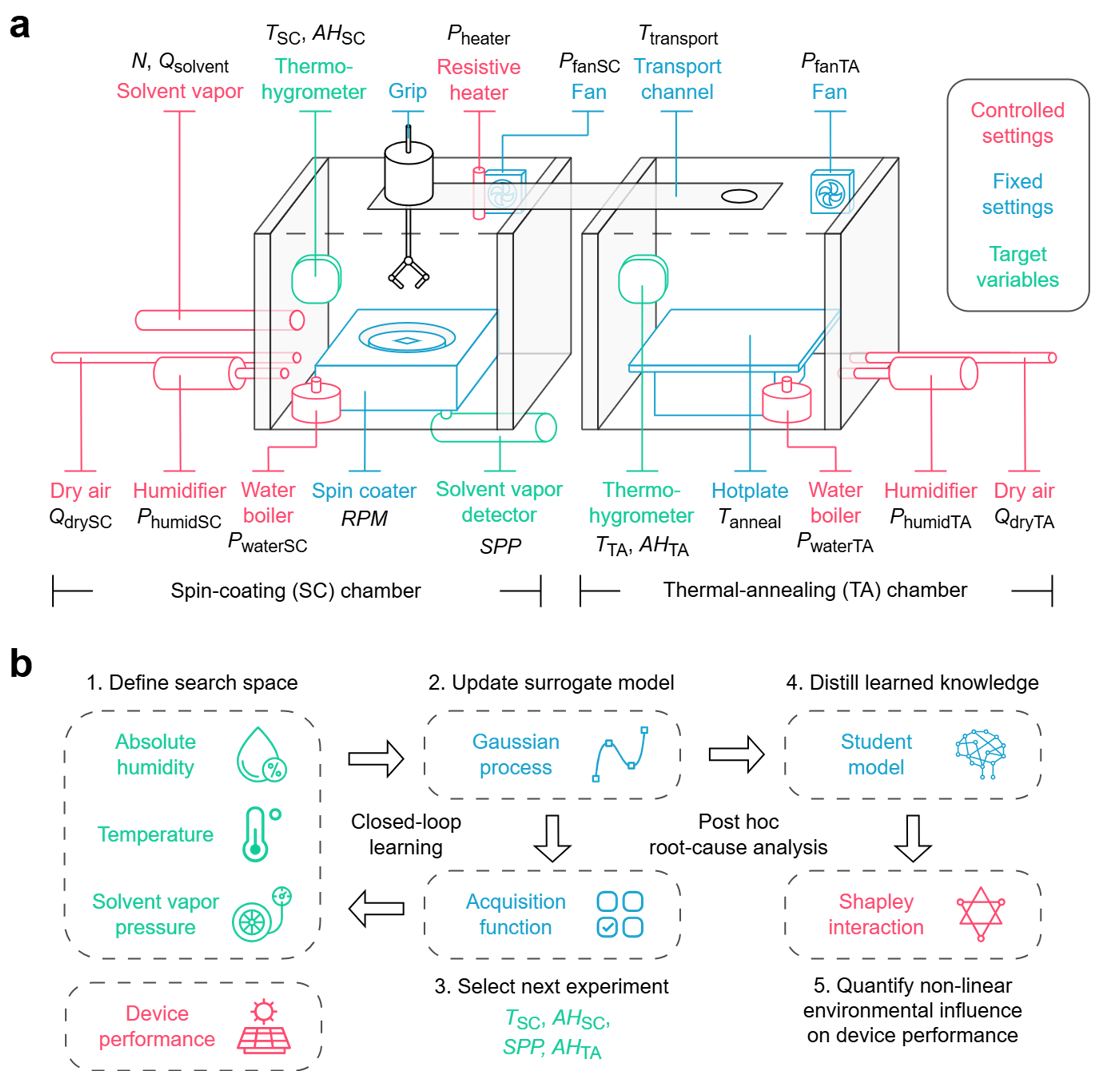
Temperature, humidity, and solvent vapor can all change how a perovskite film forms. We combined controlled experiments with interpretable machine learning to separate these effects and examine how they interact, helping explain why device performance varies.
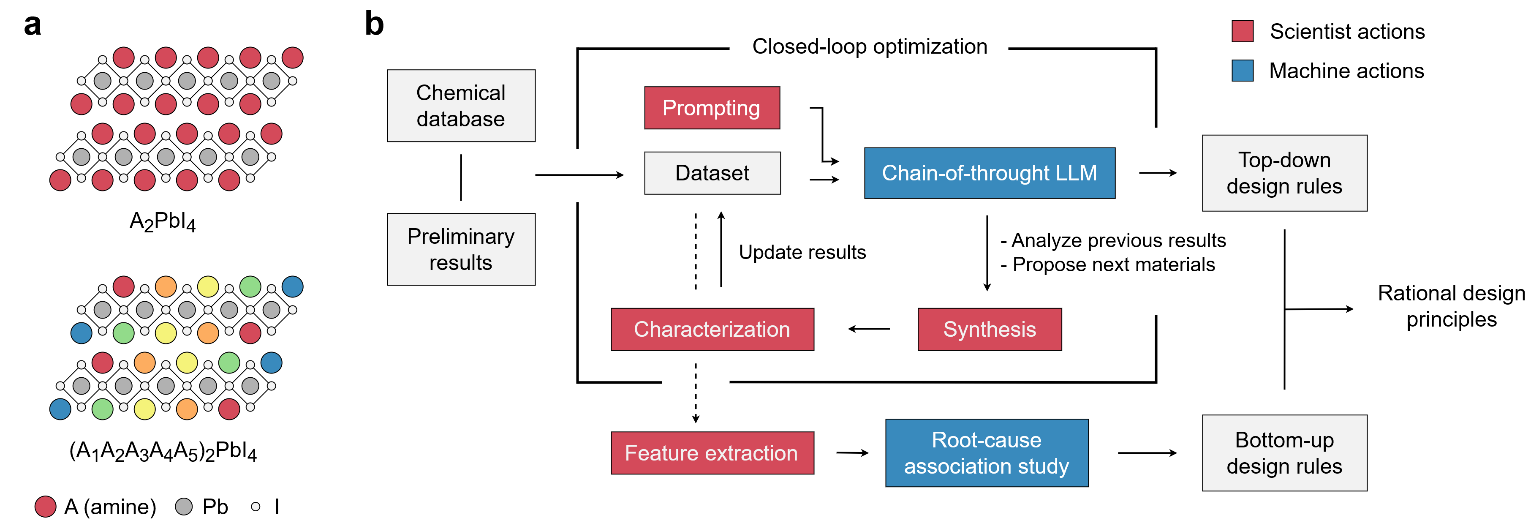
I’m interested in how language models can help us decide what to try next in the lab. In this work, we connect model-generated hypotheses with experimental testing and statistical analysis to develop design rules for complex perovskite compositions.
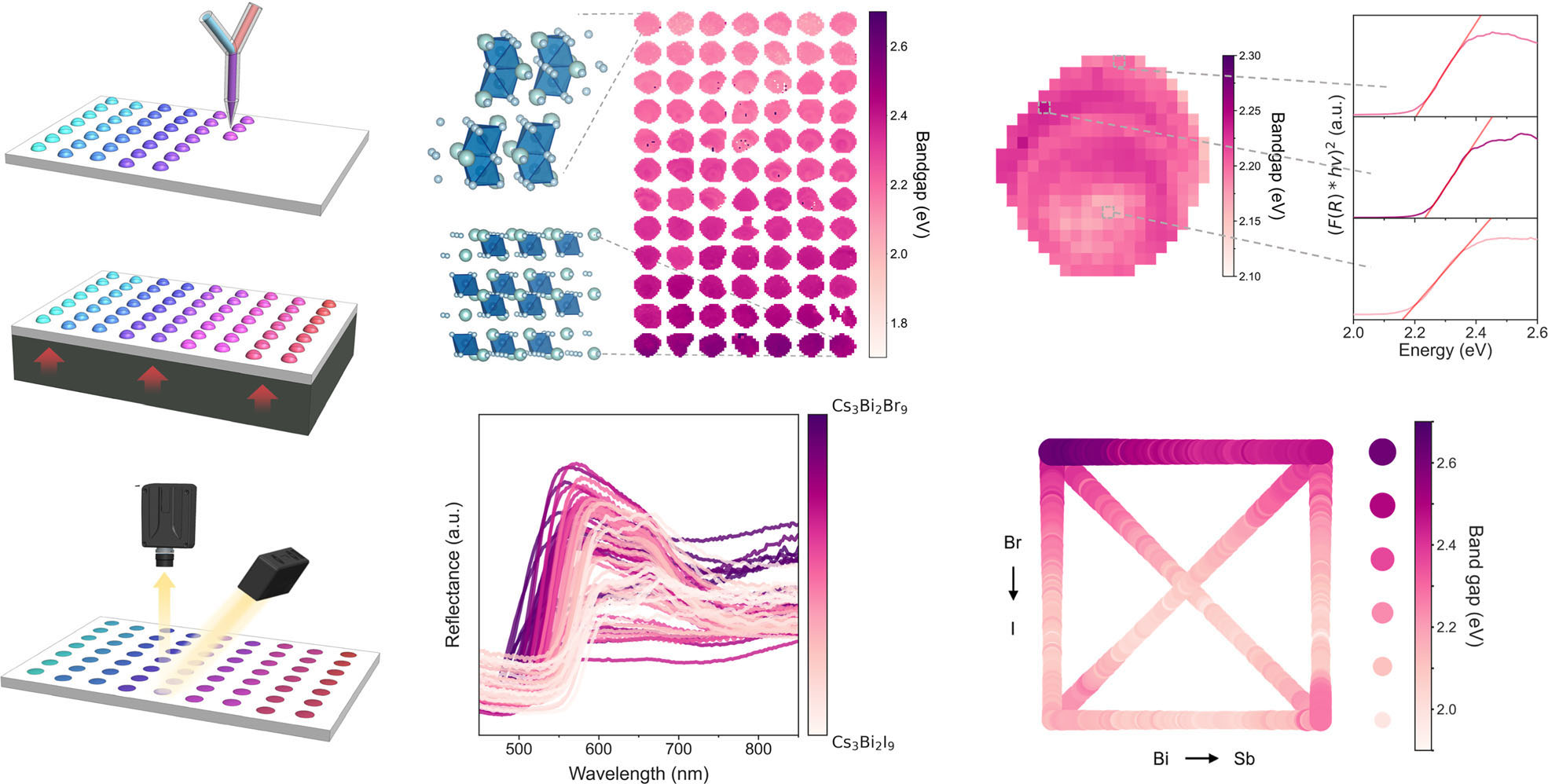
Making many materials is only useful if we can measure them efficiently. We combined hyperspectral imaging with automated analysis to map bandgaps across printed material arrays, connecting local optical properties with a wide range of compositions.
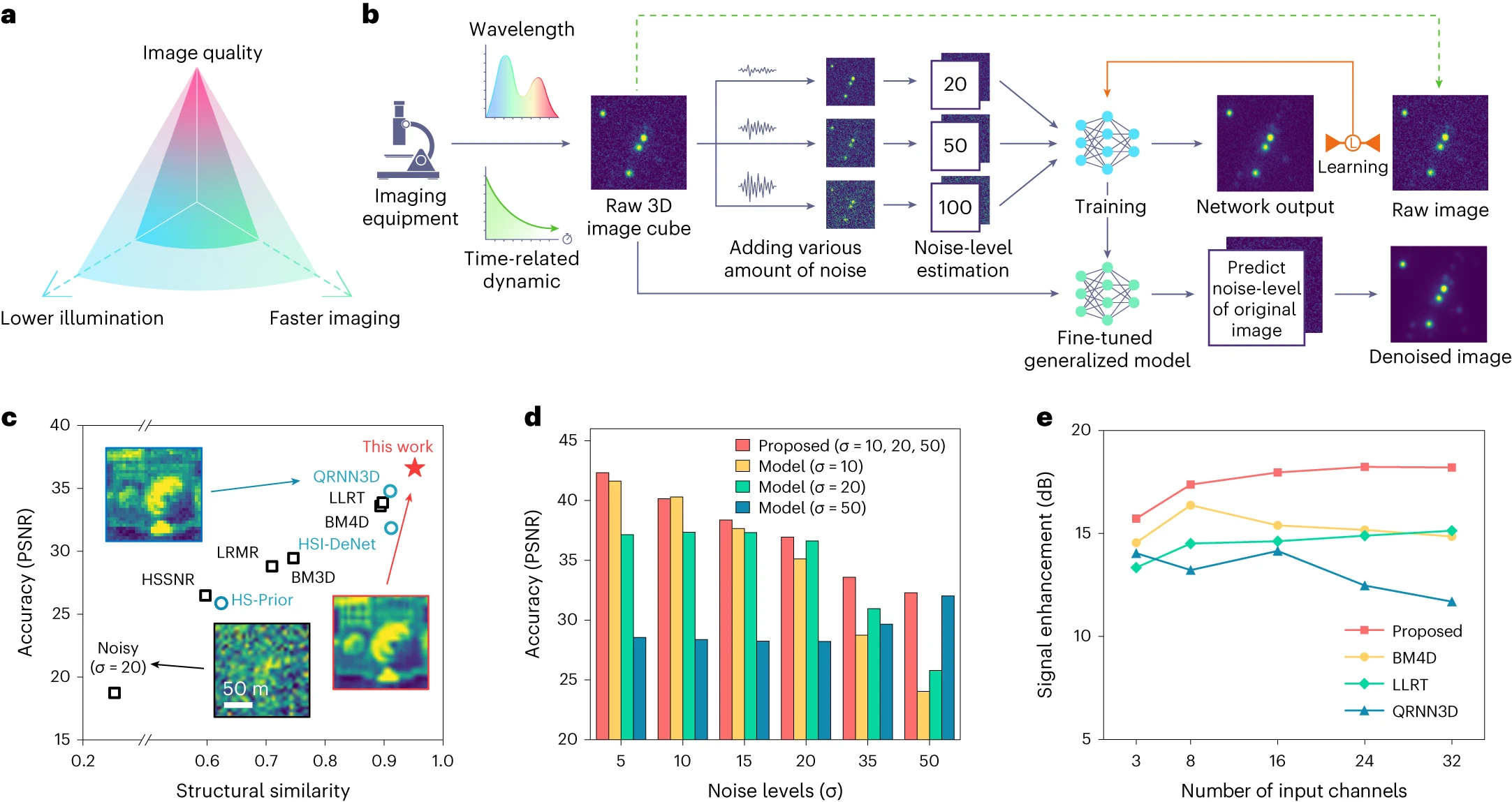
Fast measurements often mean noisy images. We developed a self-supervised method that recovers weak optical signals without clean reference images for training. This lets us follow changes in perovskite LEDs that are difficult to see with conventional imaging.
I’d be happy to hear from you if you’re exploring how optical experiments and machine learning can help us better understand materials—or if you simply have a question or an idea to share.