I work at the meeting point of optical experiments, machine learning, and materials science.
01 / LEARNING FROM LIMITED EXPERIMENTAL DATA
Making the most of what we can measure
Experimental data rarely look like a clean benchmark dataset. Labels can be expensive, reference measurements may be unavailable, and weak signals are easily buried in noise. I develop methods that learn under these conditions, using self-supervision and scientific knowledge to make the available data more useful.
Nature Machine Intelligence · 2023
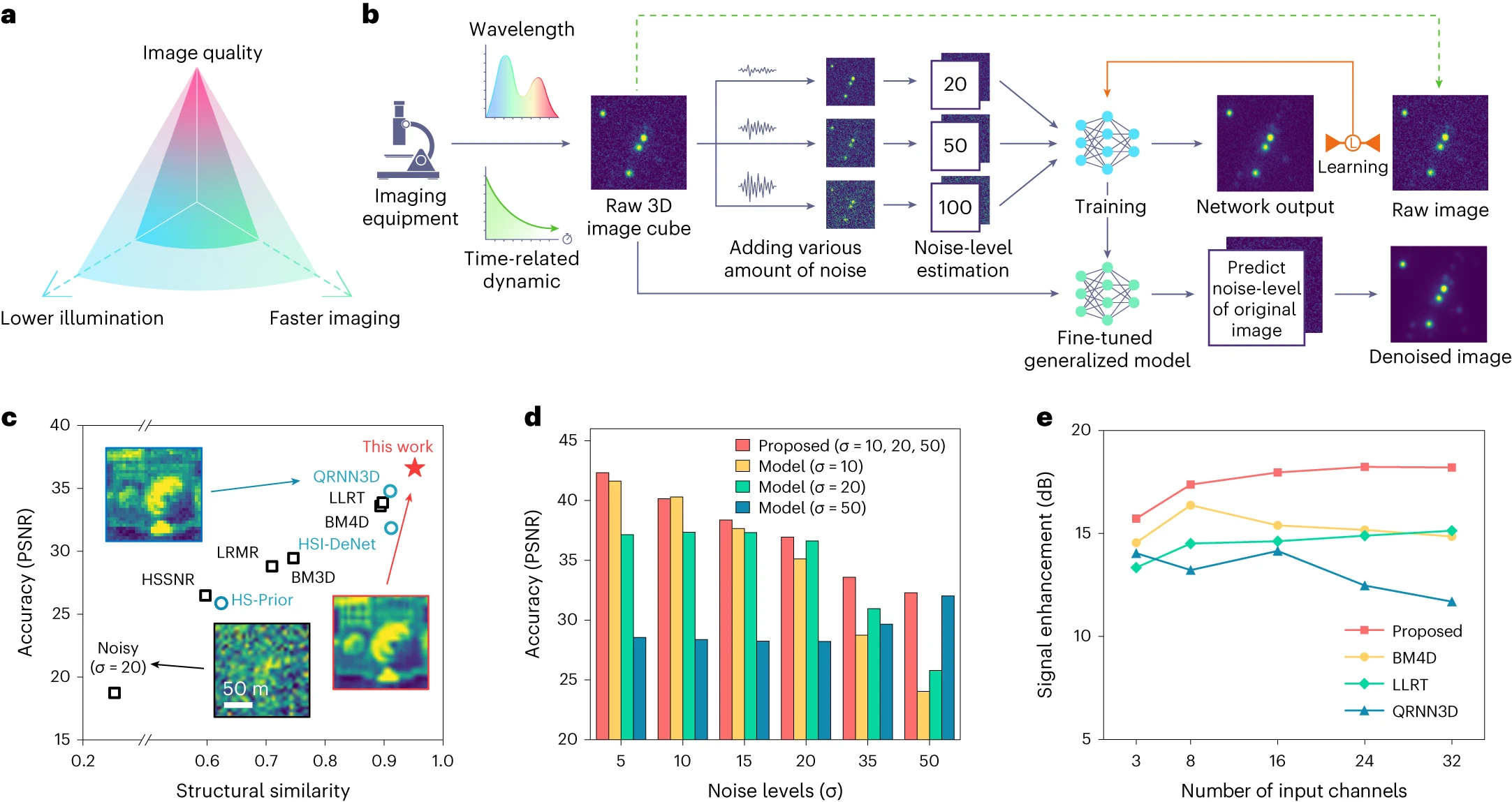
Seeing more with fewer photons
Fast measurements often mean noisy images. We developed a self-supervised method that recovers weak optical signals without clean reference images for training. This lets us follow changes in perovskite LEDs that are difficult to see with conventional imaging.
Bringing chemical knowledge into diffraction analysis
Diffraction patterns contain structural information, but composition provides useful context. Chem-XRD combines the two to identify phases in perovskite materials and their decomposition products.
Beyond materials, I have also applied unsupervised learning to hyperspectral leaf diagnosis. It is another setting where rich measurements need to be interpreted without extensive labels. Recent publications
02 / ADVANCED OPTICAL CHARACTERIZATION
Seeing how materials change
A single average measurement can miss a lot. I’m interested in how optical properties vary from place to place, how they evolve during operation, and what their spectra reveal. Combining spatially and temporally resolved imaging with automated analysis helps us investigate these changes across many material compositions.
Nature Communications · 2025
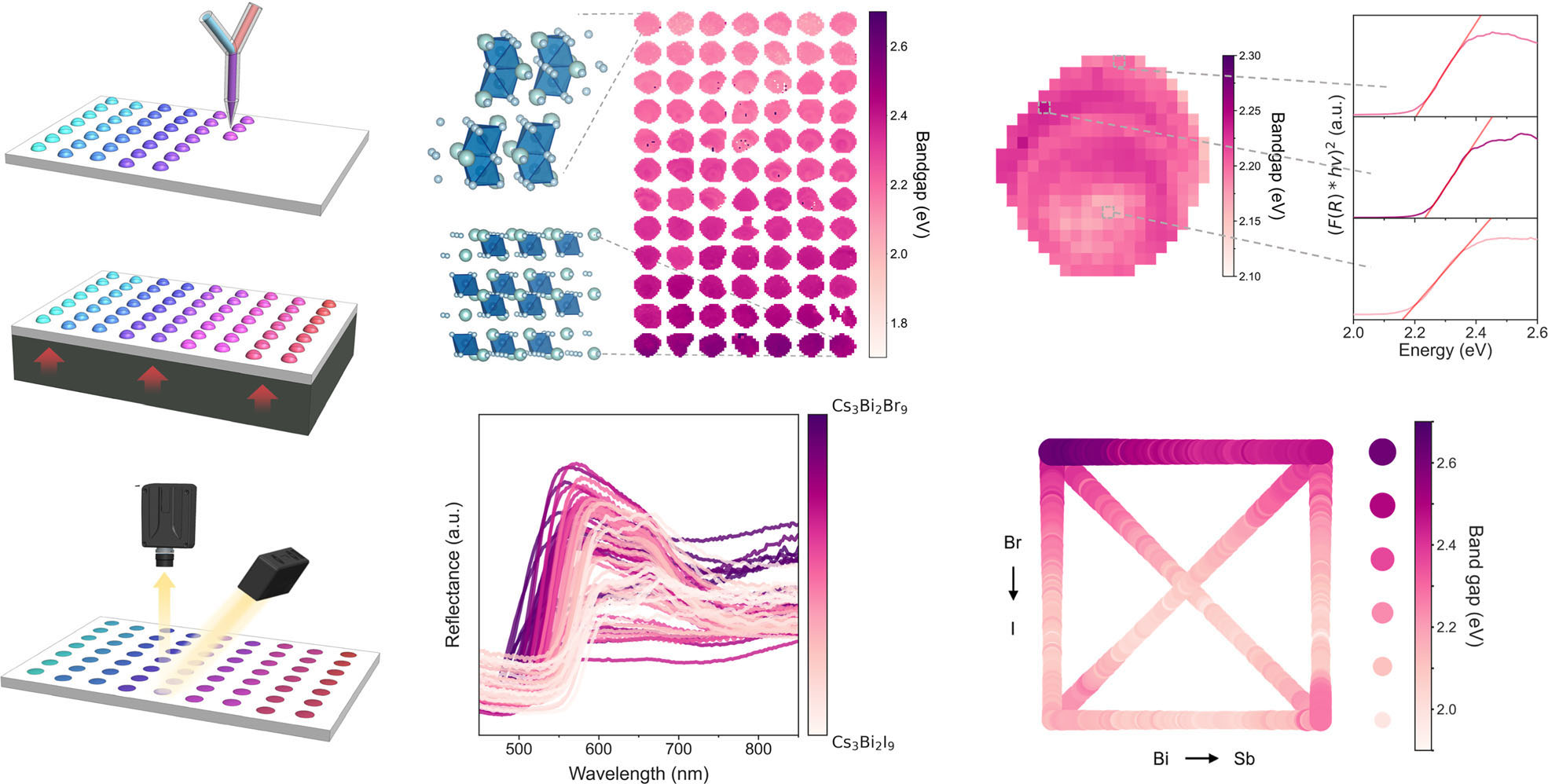
Mapping materials, one spectrum at a time
Making many materials is only useful if we can measure them efficiently. We combined hyperspectral imaging with automated analysis to map bandgaps across printed material arrays, connecting local optical properties with a wide range of compositions.
This collaborative work brings computer vision and path planning into contact-based characterization. The robot uses sample images to choose measurement points and efficiently map local semiconductor properties.
A model that predicts a good result is useful. I also want to know what we can learn from it. I combine interpretable models with controlled experiments to examine how variables interact, and use language models to help connect scientific ideas with experiments that can test them.
ACS Energy Letters · 2026
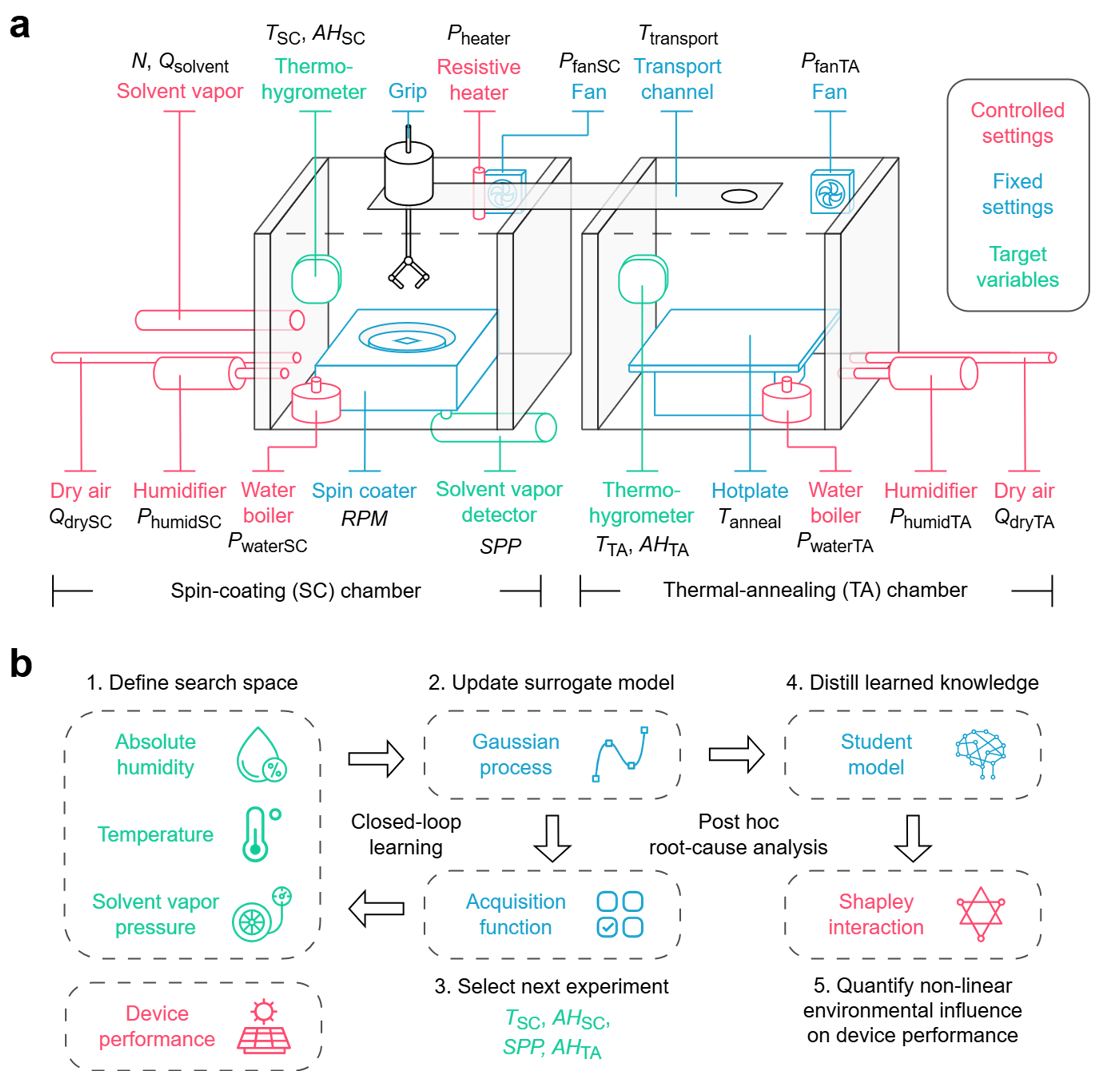
Understanding why experimental conditions matter
Temperature, humidity, and solvent vapor can all change how a perovskite film forms. We combined controlled experiments with interpretable machine learning to separate these effects and examine how they interact, helping explain why device performance varies.
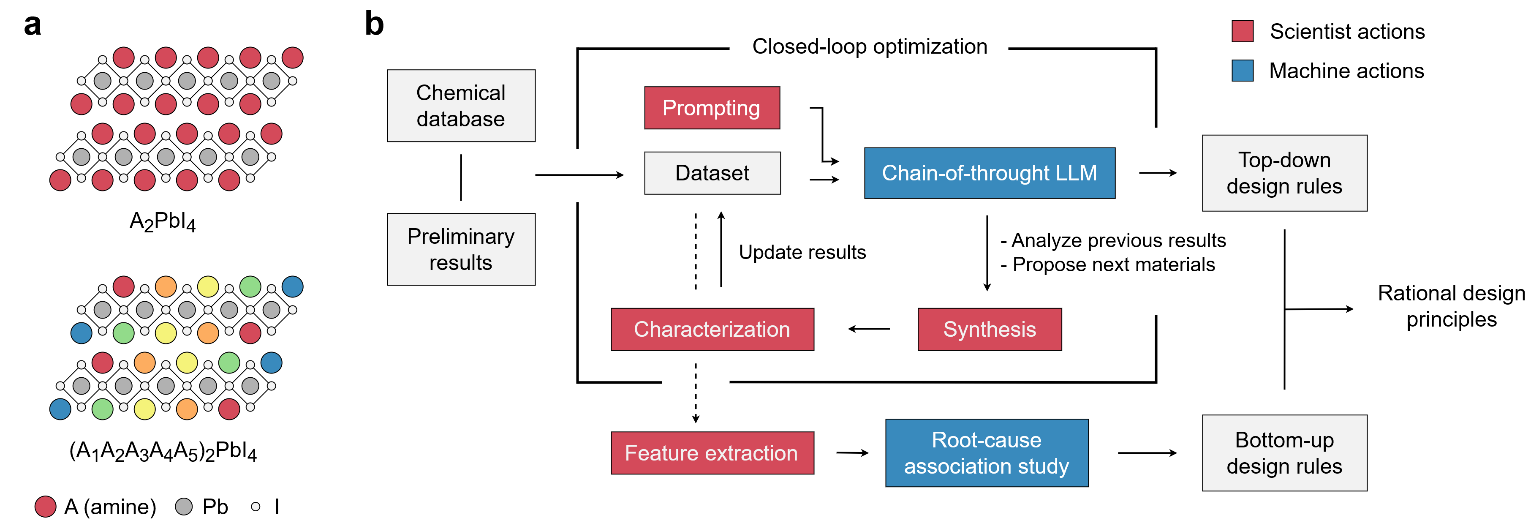
I’m interested in how language models can help us decide what to try next in the lab. In this work, we connect model-generated hypotheses with experimental testing and statistical analysis to develop design rules for complex perovskite compositions.